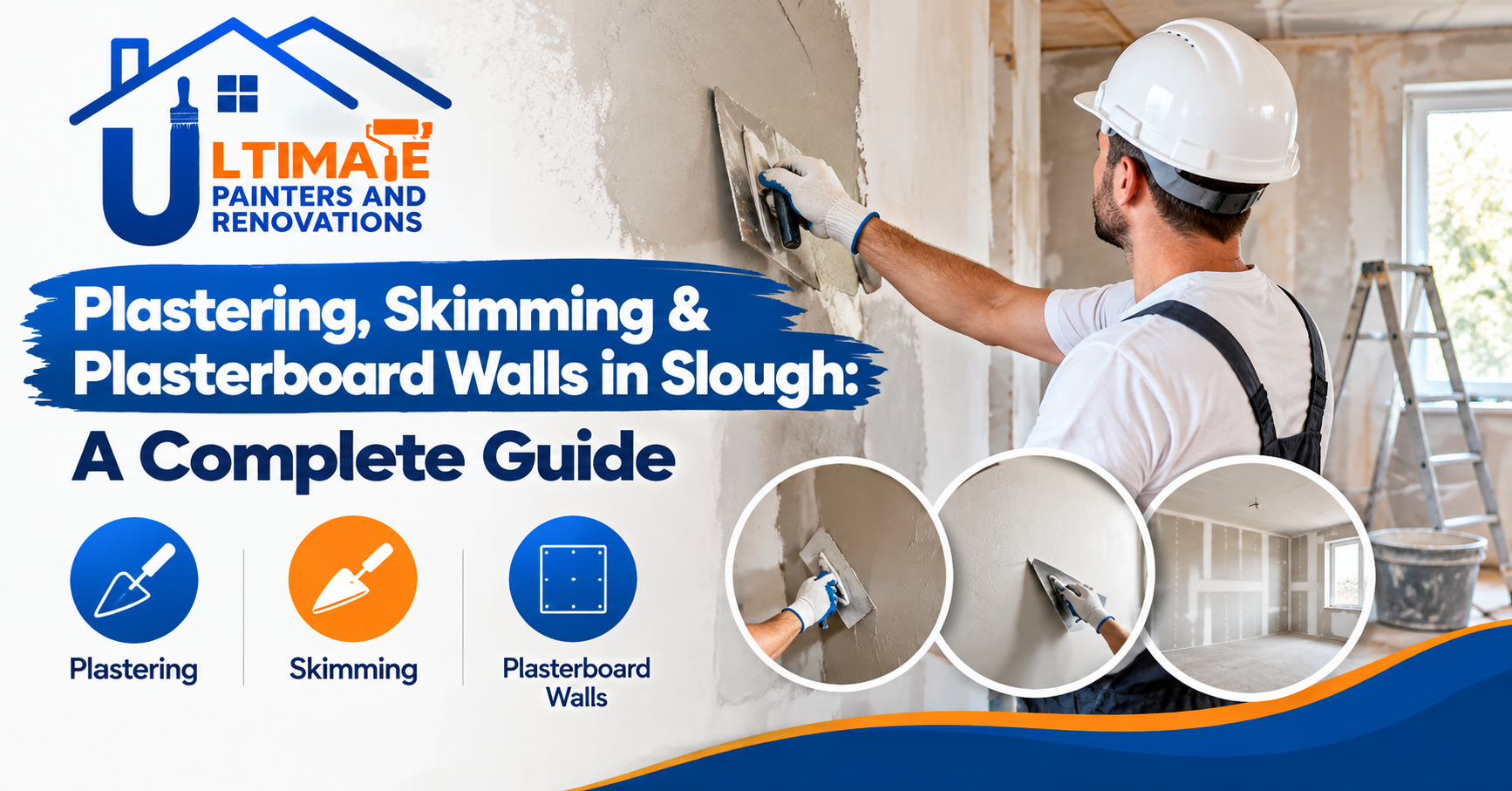
Plastering, Skimming & Plasterboard Walls in Slough: A Complete Guide
If your walls or ceilings are cracked, uneven, or simply due an update, understanding plastering, skimming and plasterboard walls in Slough is a good starting point before booking any work. These three terms often get used interchangeably, but they refer to different processes, each suited to different situations. This guide explains what each involves, when you’d need one over another, and what to expect when hiring a professional for the job.
Plastering, Skimming and Plasterboarding: What’s the Difference?
Understanding the distinction between these processes helps you communicate clearly with any tradesperson and avoid paying for the wrong type of work.
What Is Plastering?
Plastering refers to the broader process of applying a smooth, durable finish to walls and ceilings. This can mean applying a full new coat over bare brick or blockwork, known as a “float and set” finish, or simply refreshing an existing surface. Plastering creates the base layer that decorating — painting or wallpapering — is applied to.
What Is Skimming?
Skimming is a specific type of plastering. It involves applying a thin top coat, usually around 2mm thick, over an existing surface such as plasterboard or an older plaster layer that’s structurally sound but rough, marked, or uneven. Skimming is common when walls don’t need full replastering but do need a smooth, paint-ready finish. It’s often the quickest and most cost-effective option where the underlying wall is in reasonable condition.
What Are Plasterboard Walls?

Plasterboard, sometimes called drywall, is a manufactured board made from a gypsum core sandwiched between paper layers. It’s fixed to timber or metal studwork to create new internal walls, or fixed over existing masonry walls before skimming. Plasterboarding is commonly used when building a stud wall, boarding a loft conversion, or covering an uneven or damaged wall that isn’t worth replastering directly.
When Do You Need Each Type of Work?
Choosing the right approach depends largely on the current condition of your walls and what you’re trying to achieve.
Full replastering is usually needed when:
- Plaster is cracked, crumbling, or coming away from the wall
- There’s been water damage or damp affecting the surface
- Walls are being altered structurally, such as after removing a chimney breast
- You’re renovating an older property with original lime plaster in poor condition
Skimming is typically the right choice when:
- The wall is structurally sound but has surface imperfections
- You’re covering new plasterboard for the first time
- You want to refresh a tired-looking room before decorating
New plasterboard is generally required when:
- Building a stud wall to divide a room
- Boarding out a loft conversion or extension
- Covering exposed timber, insulation, or an uneven masonry wall
What Happens During a Plastering Job

A typical plastering job follows a fairly consistent process, regardless of the exact type of work involved.
Preparation
The room is usually cleared or protected with dust sheets, and any loose or damaged material is removed from the wall. Sockets and switches may need to be temporarily disconnected by a qualified electrician if plaster is being applied around them.
Application
For plasterboard walls, boards are cut to size and fixed securely to studwork or dabbed directly onto masonry using adhesive. Joints between boards are taped and filled before skimming begins. For skimming or full plastering, the plaster is mixed and applied in thin, even coats using a trowel, then smoothed to a flat finish as it begins to set.
Drying Time
Fresh plaster typically needs several days to dry fully before it’s ready for painting, though this can vary depending on room ventilation, humidity, and the thickness of the coat applied. Painting too early is one of the most common mistakes homeowners make, often leading to a patchy or flaking finish.
Why Hire a Professional Plasterer
Plastering looks straightforward when watching an experienced tradesperson, but achieving a genuinely flat, smooth finish takes practice. Uneven pressure, incorrect drying times, or poor surface preparation can all lead to visible lines, cracks, or an inconsistent texture once painted.
A professional plasterer in Slough will also know how to deal with common local property issues, such as older homes with lime plaster that behaves differently to modern gypsum plaster, or newer builds where plasterboard has been fitted to a tight schedule and needs careful joint finishing.
Choosing the Right Plasterer for Your Project
When comparing plasterers, a few practical checks can help you choose confidently:
- Ask to see photos of previous plastering or skimming work, ideally similar in scale to your project
- Check that they carry public liability insurance
- Request a clear written quote that specifies whether the price covers materials, labour, or both
- Ask how many coats are included and the expected drying time before decorating
- Confirm whether they’ll also handle any related work, such as making good around sockets or skirting boards
Ultimate Painters and Renovations is one example of a team working across Slough that handles plastering, skimming and plasterboard installation as part of wider renovation and decorating projects, which can be useful if you’re planning to have walls plastered and painted as part of the same job.
Common Questions About Plastering Costs and Timescales
Costs for plastering work vary depending on the size of the room, the type of work required, and whether full replastering or a simple skim coat is needed. Skimming existing plasterboard is generally quicker and less costly than a full float-and-set job on bare brickwork. Timescales also depend on scope — a single room skim might be completed within a day or two, while a full property replaster, particularly one involving new plasterboard walls, can take considerably longer.
It’s worth getting a written quote from a couple of plasterers near me searches or local recommendations, so you can compare pricing and included work before committing.
Preparing Your Home Before Plastering Begins
A little preparation goes a long way toward a smoother project. Moving furniture away from walls, removing wall hangings, and covering flooring helps protect your home from dust and debris. It’s also worth discussing access arrangements in advance, particularly for larger rooms or multi-day jobs, so the plasterer can work efficiently without unnecessary delays.
Frequently Asked Questions
How long does plaster take to dry before painting?
Most plaster needs around five to seven days to dry fully before painting, though this can vary depending on the thickness applied, room temperature, and ventilation. Painting over damp plaster often causes flaking or discolouration later on.
Can you skim over old plasterboard?
Yes, provided the plasterboard is sound, securely fixed, and free from damage or damp. If boards are damaged, loose, or affected by water, they’ll usually need replacing before skimming can go ahead.
Is skimming cheaper than full replastering?
Generally, yes. Skimming involves applying a thinner finishing coat over an existing sound surface, which typically takes less time and material than a full float-and-set replaster on bare masonry.
Do I need an electrician when plastering around sockets?
In most cases, sockets and switches should be safely disconnected before plastering work takes place around them, which usually requires a qualified electrician, particularly for anything beyond simply removing a faceplate.
How do I find a reliable plasterer in Slough?
Look for clear written quotes, evidence of previous work, and appropriate insurance. Searching for plasterers in Slough and comparing a couple of local recommendations is generally the most reliable way to find a trustworthy tradesperson.